
EU4Environment - Water & Data (2021-2024): Key Results
EU Eastern Partnership countries, Armenia, Azerbaijan, Georgia, Moldova and Ukraine, face common water management challenges, from ageing infrastructure and limited resources to weak monitoring and access to environmental data.
Since 2016, the EU has supported reforms aligned with EU and international standards. Through EU4Environment – Water Resources and Environmental Data (2021–2024), countries were further strengthened in their water governance and environmental information systems.
Building on this work, the EU4Green Recovery East programme (2025–2028) continues support towards sustainable water management and a greener, circular economy.
Explore below EU4Environment - Water & Data (2021-2024) key results, featuring stories, videos, and links to to key reports.
Strong national institutions and legal frameworks are essential for tackling cross-cutting water challenges.
Through ten National Policy Dialogues, the programme fostered inter-sectoral coordination and led to important reforms, including:
- Armenia’s Amended Water Code (2022),
- Azerbaijan’s National Water Strategy (2024),
- Georgia’s National Law on Water Resources Management (2023),
- Ukraine’s National Water Strategy (2022).
Policy Dialogues also promoted the development of methodologies on groundwater norms (Armenia), hydromorphological monitoring (Ukraine), and the identification of illegal dams (Moldova), later transposed into national standard.
Two national-wide studies on key water issues.
A regional study on human capital in the water sector was published in 2024 with recommendation for improving the number and qualification of water professionals in the EaP countries.
Another pilot study identified sustainable alternative water sources for a water-scarce region in Azerbaijan (including rainwater harvesting, groundwater use, and treated wastewater reuse for irrigation).
Because rivers do not stop at borders, transboundary cooperation is equally important.
A first milestone was reached in October 2023 with the Trilateral Prut River Cooperation Declaration, signed by the Environment Ministers of Moldova, Romania, and Ukraine, fulfilling an ambition of over 20 years that is now implemented in the related new Prut Expert Group.
In parallel, competent agencies from Armenia and Georgia advanced a bilateral agreement on water monitoring in the Khrami-Debed Basin, including a guidance document on transboundary monitoring procedures (the agreement was signed on 3 December 2025). EaP countries also reported on SDG indicator 6.5.2 (transboundary cooperation), contributing to international monitoring and to their national strategies.
Water reforms can only succeed if financing is sustainable. Three regional studies proposed reforms to secure funding for water: Funding for water security in EaP countries, Roadmaps for Reform, Enabling environment.
In parallel, five national studies explored new economic instruments such as tariff reform in Ukraine, abstraction fees and pollution taxes and irrigation service fees and subsidies in Armenia, water tax in Moldova, surface water abstraction charges in Georgia, and proposals to enhance finance in water sector in Azerbaijan. These reforms aim to make water services more sustainable and ensure long-term investment.
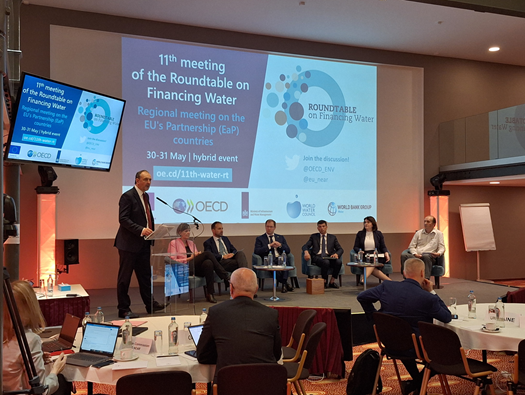
Roundtable on financing water in the EaP countries, May 2024
River Basin Management Plans (RNMPs) are the cornerstone of EU water policy to reduce pollution
and other human deterioration of river basin.
Developing such a plan brings together different water users (industry, agriculture, energy, nature conservation, tourism and local inhabitants) to balance needs and mobilise investments and stakeholder support.
With programme support, 12 RBMPs were completed in Armenia (Northern River Basin District), Georgia (Enguri and Rioni River Basin Districts) and Ukraine (for all nine River Basin Districts). Consultation meetings involving NGOs, local authorities, Academia and water user representatives were held in the countries to collect feedback and raise awareness about the planning process and its future implications.
A historic milestone was the adoption of 9 RBMPs in Ukraine by late 2024, covering 600,000 km² and guiding €7.7 billion of needed investment. Ukraine has since 2025 established a working group to stimulate and monitor implementation.
Across all RBMPs, wastewater treatment emerged as the largest cost driver (70% of investments). Continued efforts are needed to mobilize domestic and external funding and strengthen basin-level governance to implement measures.
While RBMPs focus on pollution control, quantitative planning manages local water allocation and scarcity issues.
To address water scarcity, the programme developed a pilot quantitative water management plan in Armenia for the Kasakh Sub-basin and a guide to prepare such plan in other parts of the EaP region.
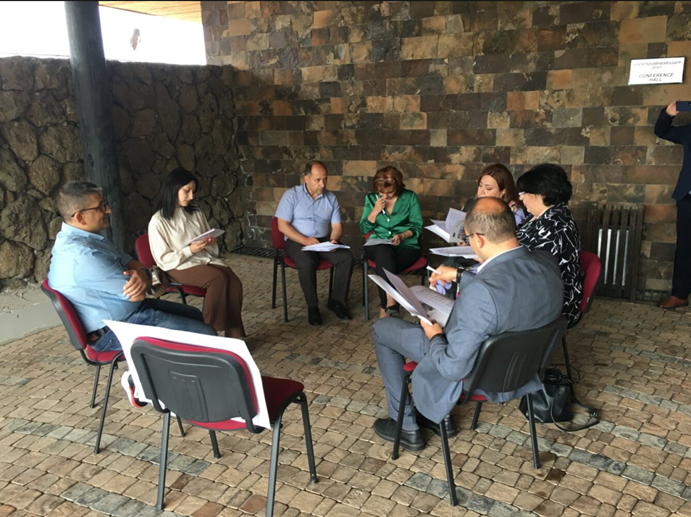
Consultation on the Kasakh quantitative management plan in Armenia, June 2023
Nature-based Solutions (NbS) provide low-cost, climate-resilient alternatives to hard infrastructure, improving ecosystems while addressing societal needs.
The programme introduced NbS at field visits, such as the constructed wetland at Orhei (Moldova), or an urban creek restoration in Vienna (Austria).
A catalogue of 34 Nature-based Solutions was published, providing factsheets, case studies, and cost references for selecting the appropriate NbS in a local environment. Pilot case studies were also identified in Azerbaijan (Hajigabul Lake and Kura Delta) and Moldova (Riparian Forest Restoration). Recommendations were prepared to integrate cost-effective Nature-based Solutions (NbS) in EaP countries.
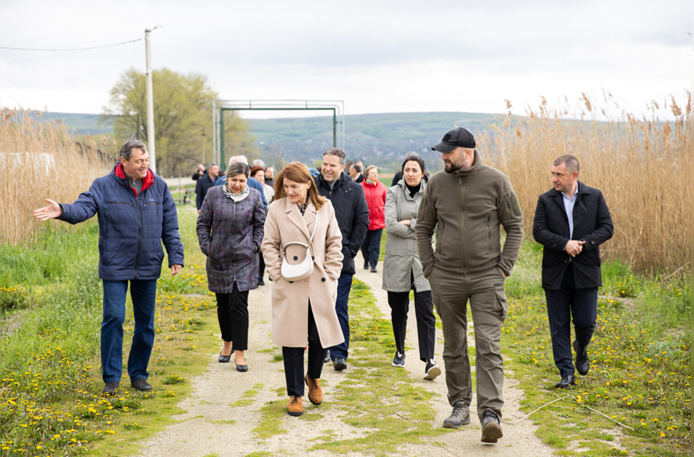
Field trip in the frame of a National Policy Dialogue to the big constructed wetland near Orhei in Moldova
Reliable water data are essential for sound policy and investment decisions that safeguard people’s health.
The programme organised local and transboundary surveys on rivers, groundwater and coastal waters to provide valuable new datasets on ecological water quality. It trained laboratory experts on analyzing EU priority pollutants (including PAH, chlorinated pesticides, and phthalates). The programme supported the accreditation of laboratories in Armenia and Ukraine to international ISO 17025 standards, improving data reliability and comparability. Further investment is needed in monitoring networks, equipment, and training to address additional parameters and improve the knowledge on water resources.
Wastewater surveillance for COVID-19 was introduced since 2022 in all five countries by meetings and trainings. Closely coordinated with the EC and JRC surveillance systems were established in Georgia, Moldova, and became even fully fledged in Ukraine. Cooperation under the UNECE Protocol on Water and Health was strengthened: Ukraine integrated water- and health-related targets into its National Water Strategy.
Accessible data empowers decision-makers and citizens alike.
The programme supported EaP countries in upgrading their public portals with API access for water cadastre permits in Armenia, on surface water quality and solid waste data in Moldova, and on water use/discharge declarations in Georgia.
Knowledge and application of water accounting was extended in all countries. An infographics summarizes for Armenia the water flows and stocks in 2022 . Young innovators were engaged through Water Data Hackathons in Armenia and Moldova (2024) and developed interesting ideas of local tools to better understand data and help decision-making.
The report Open Data and Citizens Participation in Data Collection and Analysis provides lessons learnt about this work and recommendations for the future.
The webbook Environment at a Glance in EaP countries is a tentative to give a broad overview of the state of the environment in the EaP, with data updated automatically (publicly available data provided by country ministries, the European Environment Agency and Intergovernmental organisations such as the World Bank).
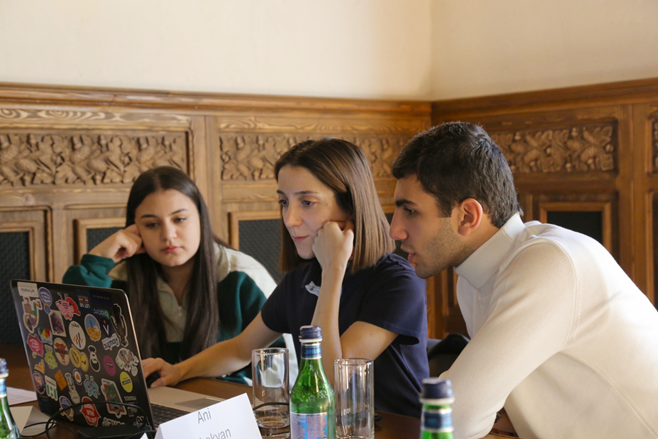
Water Data Hackathon in Armenia, 2024
While water cannot be managed in isolation, this applies similarly to land use, waste, and air pollution.
Application of EU Earth observation tools can significantly enhance the EaP countries’ ability to monitor their environment. As a basis for assessing land use and land cover changes, the programme supported the development of Corine Land Cover (CLC) in EaP countries. These new CLC data were published nationally and on the European Environment Agency’s Spatial Data Infrastructure.
EU experts trained and enabled the EaP countries on Copernicus satellite data applications in agriculture, water resources and forestry to complement traditional in-situ monitoring. See also the Regional report on land and agricultural monitoring.
In the waste sector, support focused on preparing Extended Producer Responsibility (EPR) laws in Georgia and Ukraine to improve waste management. Regarding air pollution, policy and technical support was given for local automated data transfer and for reporting to global emission inventories. Workshops coordinated with the Covenant of Mayors East raised EaP municipalities awareness on tackling local air quality issues.
A report informs on air and waste management data and statistics activities undertaken by the programme. Lastly, the programme explored co-operation options with EEA and facilitated the preparation of data for new EaP country-spaces in the European State of Environment Report 2025. Moldova and Ukraine committed to become co-operating countries of the European Environment Agency.
Change only happens if citizens are engaged.
Numerous Communication activities significantly enhanced the visibility of the programme across the Eastern Partnership countries (over 90 articles published, 2,100 downloads recorded, and 12,700 visitors accessed the programme website).
Through Green Days campaigns, contests, and clean-up events, the programme reached over 2,000 people, mainly youth. Around 140 students and young professionals joined targeted activities, including hackathons in Armenia and Moldova, a lecture at UFAZ University in Baku, and a Water-Energy nexus session during EU4Energy Week.
Videos explained water monitoring, sustainable farming, or river rehabilitation – and also captured the impact of war on water in Ukraine. At EU level, the programme contributed to the Commission’s Water Wise campaign, with articles on progress in safeguarding water quality and quantity.
The videos below explain EU-standardised water monitoring techniques used in the field, sustainable farming practices, and river rehabilitation works. They also highlight the impact of the war on water resources in Ukraine.